Lebanon Today
The Central Bank of Iran has officially announced its decision to withdraw the license of “Ayandeh” Bank, an action aimed at addressing the deteriorating financial situation of the banking institution.
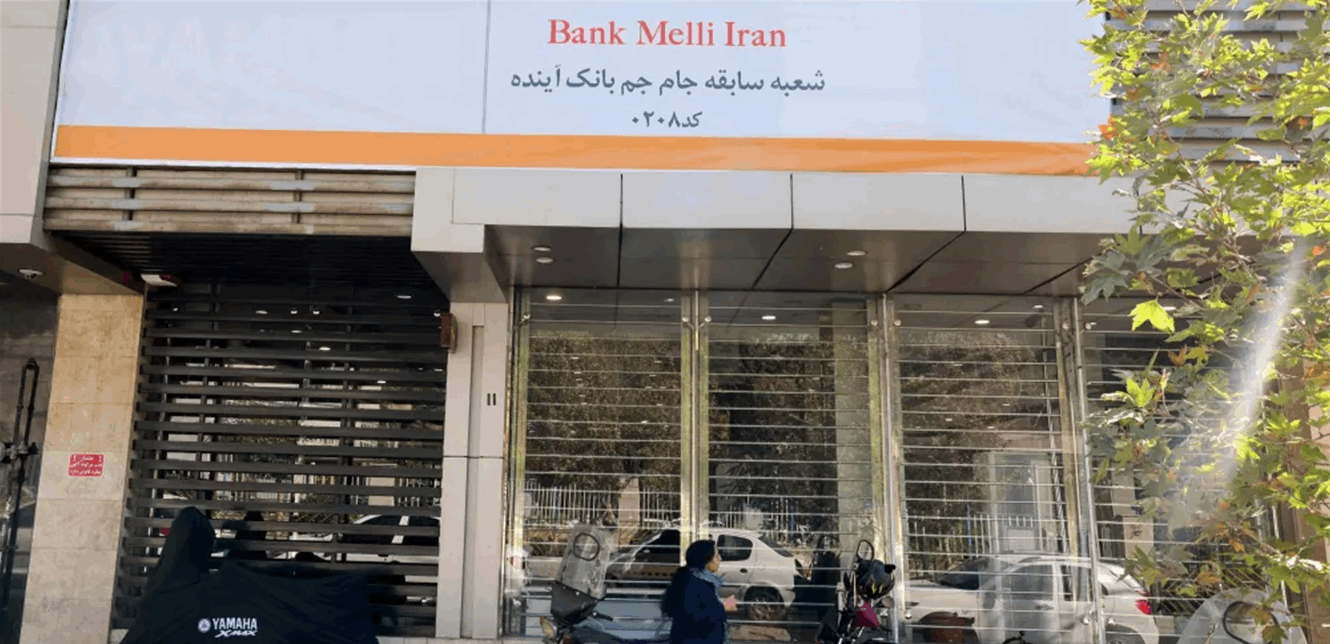
In a parallel step, the deposits and obligations of “Ayandeh” Bank, estimated at approximately 250 trillion Toman (equivalent to approximately $5.95 billion), are currently being transferred to the National Bank “Melli.”
Official data indicate the accumulated debts of “Ayandeh” to the Central Bank, amounting to 500 trillion Toman (approximately $11.9 billion). These figures reveal a critical financial situation, as the capital adequacy ratio has fallen to dangerous levels, reaching minus 600% according to an official statement, while later data show a less severe but still alarming figure of minus 350%, effectively meaning the bank is in a state of total bankruptcy.
In a statement, the Deputy Head of the Supervisory Department at the Central Bank, Farshad Mohammadpour, explained that the structural problems suffered by “Ayandeh” Bank were “irreparable,” and that these imbalances had damaged the reputation of the Iranian banking system as a whole.
However, the crisis is not limited to “Ayandeh” Bank alone. According to Central Bank figures, the Iranian banking sector faces significant challenges, with 18 out of 29 operating banks in the country having a capital adequacy ratio below the required minimum of 8%.
More alarmingly, eight banks are recording dangerously negative ratios, including: “Sepah” (-23.2%), “Iran Zamin” (-21%), “Dey” (-53.5%), “Sarmayeh” (-328%), and “Ayandeh” (-360.52%).
Analysts warn that the collapse of a large bank like “Sepah,” which has a customer base estimated at more than 42 million people, could lead to a widespread financial crisis, with a decline in the ability to meet obligations and a threat to the savings of a large segment of Iranian citizens.
The roots of this crisis go back to the structure of the Iranian economy affected by sanctions. Since the escalation of nuclear and military programs, Iran has faced successive waves of economic restrictions, which culminated in the activation of the “trigger mechanism” on October 18.
These restrictions have led to the freezing of foreign assets and restricted access to finance and markets, pushing banks to rely on financing through printing money and extensive borrowing from the Central Bank, which has exacerbated inflation, fiscal imbalances, and reduced public confidence in the banking system.
In contrast, only 10 small and limited-activity banks, such as the “Iranian-Venezuelan,” “Khavarmianeh,” and “Export Development” banks, have a capital adequacy ratio exceeding 8%, and these banks play a marginal role in the banking system.
As for the major banks with a broad base, whether government-owned such as “Sepah” and “National,” or private such as “Tejarat” and “Saderat,” they operate below the required standards, and some suffer from deep negative ratios, which means that the basic structure of the banking sector suffers from internal erosion and continues to operate practically thanks to costly interventions from the Central Bank.
The repercussions of these imbalances are not only financial, but also social and political. With the weakness of the deposit guarantee fund and the budget deficit, estimates warn of the government’s inability to contain a widespread bankruptcy, which could open the door to an acceleration of capital flight, a sharp rise in the exchange rate, and worsening inflation.
Despite the clarity of the indicators, the authorities continue to conceal the facts, as there is not enough transparency in financial disclosures nor organized mechanisms for managing bank risks. In light of this fragile situation, any sudden decision, similar to the dissolution of “Ayandeh,” could lead to a new wave of panic and distrust among depositors.
source: 961 today