Lebanon Today
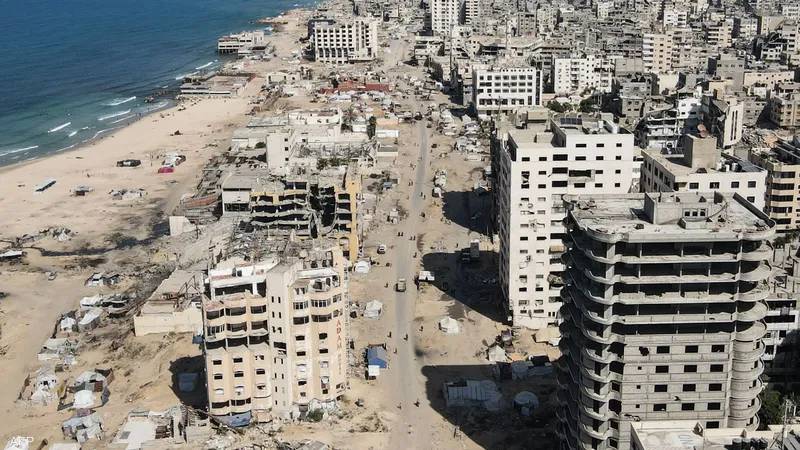
Following the start of the ceasefire agreement in the Gaza Strip, Hamas launched a large-scale security campaign.
This campaign targeted various armed groups, which the movement described as “outlaws” and “working for Israel,” in an effort to assert its authority and control over the war-torn sector.
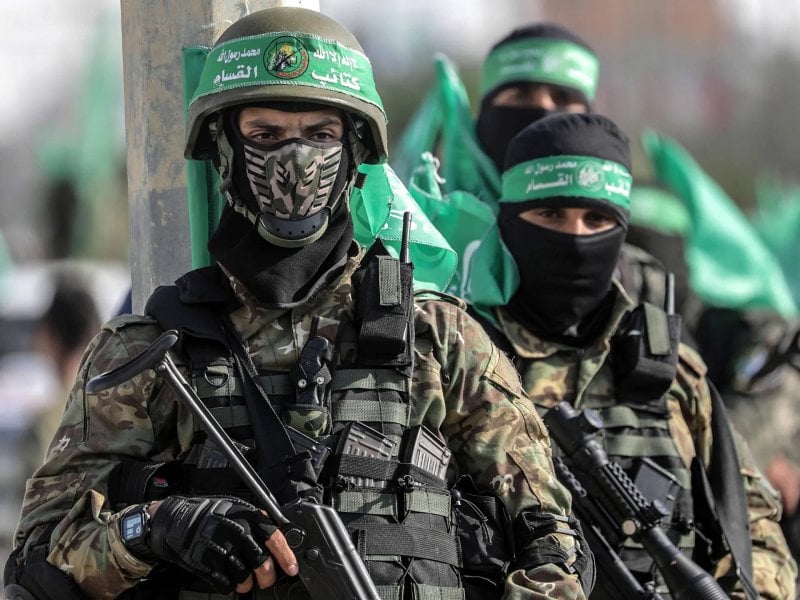
Hamas deployed units from the Izz ad-Din al-Qassam Brigades, in addition to the “Sahem” and “Rad’a” security forces, two forces recently created by the movement.
These forces spread in the areas from which Israeli forces withdrew, with the stated aim of confronting “agents and criminal groups,” according to a statement issued by the Ministry of Interior in Gaza.
Palestinian and international reports indicate the presence of four main armed groups active in Gaza.
These groups are suspected of operating in coordination with the Israeli army or under its protection in some areas behind what is known as the “Yellow Line”.
The “Popular Forces,” led by Yasser Abu Shabab, is the most prominent of these groups, comprising hundreds of armed elements deployed near the Karam Abu Salem crossing, southeast of Rafah.
According to Palestinian researcher Nasser Khadour at the ACLED organization, there are three other groups led by: Rami Halas in Shuja’iyya, Ashraf al-Mansi in northern Gaza, and Hossam al-Asatl in Khan Yunis.
Khadour believes that these formations are “organizationally weak, but they worry Hamas in areas that are still under the supervision of the Israeli army.”
For her part, Tahani Mustafa, a researcher at the European Council on Foreign Relations, considered that “these groups are treated locally as thieves, accused of cooperating with Israel, and do not have any popular legitimacy.”
The “Rad’a” force recently carried out a raid against Abu Shabab’s supporters in Rafah, where clashes erupted that coincided with the killing of two Israeli soldiers in the area.
Israel responded with air strikes that resulted in the death of more than 50 Palestinians across the sector, before again announcing its commitment to the truce.
The Al-Qassam Brigades denied any connection to the operation, while “Rad’a” later announced that it had arrested more than 100 members of the Abu Shabab and Halas groups, and seized more than 300 weapons, some of which were “Israeli-made”.
The organization’s data confirms that the “Rad’a” unit has carried out more than 20 security operations since the ceasefire, while “ACLED” documented 15 violent incidents related to it since June 2025.
As for the “Sahem” unit, which was established in 2024, it documented its participation in 130 operations that killed about 160 Palestinians.
According to researcher Khadour, “Sahem” primarily targets thieves and collaborators, and is known for its “harshness” and carrying out rapid field executions.
In addition to these groups, influential families and clans in Gaza have entered the conflict.
“Rad’a” carried out a surprise operation in the Al-Sabra neighborhood against armed men from the Daghmash family, after accusing them of killing two members of the Al-Qassam Brigades, one of whom was the son of leader Bassem Naim.
The operation ended with the arrest of dozens of the family’s sons and the field execution of eight young men in front of the residents.
The family responded with a statement denying cooperation with Israel, but admitted to “individual excesses,” accusing Hamas of “targeting all its members indiscriminately.”
While some families accepted amnesty offers in exchange for handing over their weapons, other clans rejected previous Israeli proposals to form a local council to administer Gaza after the war, stressing “they do not have the legitimacy or desire to rule.”
source: 961 today